Time Zone Variations Influencing Live Betting Dynamics in Worldwide Sports Events
Cameron Krause · Aug 25, 2026
Time Zone Variations Influencing Live Betting Dynamics in Worldwide Sports Events
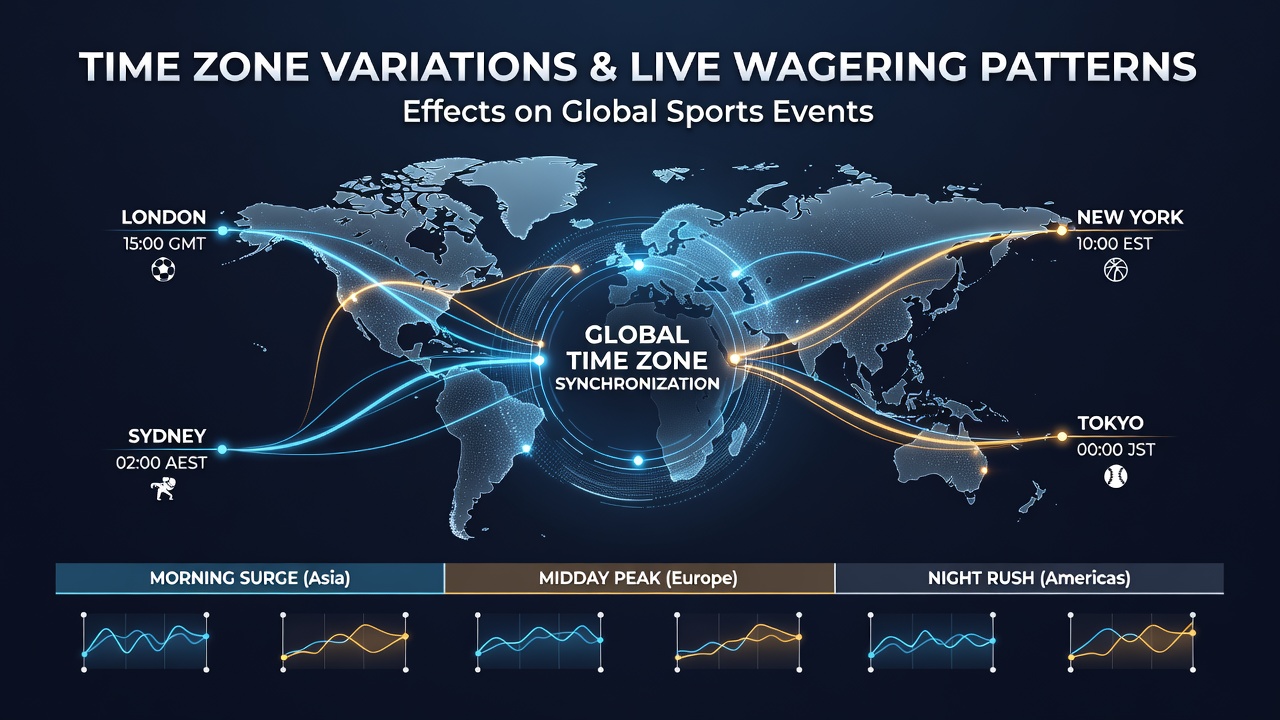
Global sporting calendars stretch across multiple continents and time zones each year, which creates measurable shifts in when bettors place live wagers and how operators adjust their markets. Data from major international tournaments shows that event start times in one region often coincide with off-peak hours in another, prompting changes in betting volume, market liquidity, and the types of props that attract the most activity. Observers note that these patterns become especially pronounced during multi-week competitions that span several time zones simultaneously.
Event Scheduling and Bettor Availability
Live wagering platforms record distinct spikes and troughs that align with local waking hours rather than the actual game clock. When a soccer match kicks off at 3 p.m. local time in Europe, for example, North American bettors may still be in early morning hours, while Asian markets remain active late into the evening; the result is a staggered flow of new money entering the same game at different stages. Research indicates that total handle during the first half of such matches often trails second-half volume by measurable margins when the majority of participants reside in distant time zones. August 2026 schedules for several rugby and cricket events already illustrate this effect, with kickoff windows placed to maximize European and Australian audiences while leaving North American bettors to join after midnight.
Market Liquidity and Odds Movement
Operators respond to these staggered audiences by widening or tightening lines based on the volume of incoming bets from each region. When European markets close for the night, liquidity sometimes drops until Asian or Australian bettors begin placing wagers, which can produce temporary price discrepancies that later correct once more participants log in. Figures from past global tournaments reveal that odds volatility rises during these transition windows, particularly on player props and in-game totals that remain sensitive to small changes in betting interest. Those who monitor exchange data across multiple jurisdictions report that the largest swings occur between 2 a.m. and 6 a.m. UTC when fewer active accounts are online.

Regional Preferences and Prop Selection
Time zone placement also influences which markets receive the heaviest traffic. Bettors logging in during evening hours in their own region tend to favor longer-duration props such as match winner or total points, whereas those joining mid-game often gravitate toward shorter-term outcomes like next-point winner or next-goal scorer. Studies tracking user behavior during the 2026 summer schedule show that prop volume from North American accounts rises sharply once European evening games reach halftime, suggesting participants adjust their selections to match the remaining game time visible in their local window. Similar shifts appear in basketball and tennis, where sets or quarters that cross midnight in one market see increased micro-prop activity from regions where the contest remains in prime time.
Technological Adjustments by Operators
Platforms have introduced features that account for these geographic differences without requiring users to manage time conversions manually. Automated market suspensions and staggered push notifications now trigger according to detected user time zones, while some operators display dual clocks or localized start-time highlights. Data collected across regulated markets demonstrates that these tools reduce the number of late or missed bets during cross-zone events. Industry reports compiled by research groups in Canada and Australia further indicate that retention rates improve when live interfaces automatically surface markets that remain open during a user’s typical active hours.
Regulatory Observations Across Jurisdictions
Government agencies tracking licensed operators have begun incorporating time-zone variables into their reporting frameworks. A report from the Australian Gambling Research Centre examined handle distribution across Asia-Pacific and European events and found that peak live-betting periods shift by as much as eight hours depending on the host city. In parallel, analyses from North American regulatory bodies note that daily deposit and withdrawal patterns among cross-border users follow similar offsets. These findings help authorities model responsible-gambling interventions that align with actual user activity windows rather than uniform calendar cutoffs.
Conclusion
Time zone variations continue to shape the rhythm of live wagering on global sports events through measurable differences in participation timing, market liquidity, and prop selection. Operators and regulators alike have adapted tools and reporting methods to these patterns, while data collected during the 2026 season reinforces the consistent link between event scheduling and regional betting flows. As international calendars expand, the same geographic considerations are expected to guide further refinements in platform design and oversight practices.