AGA Leader Addresses Prediction Market Impact on State Revenues During CNBC Segment
Eden Simmons · May 30, 2026

AGA Leader Addresses Prediction Market Impact on State Revenues During CNBC Segment
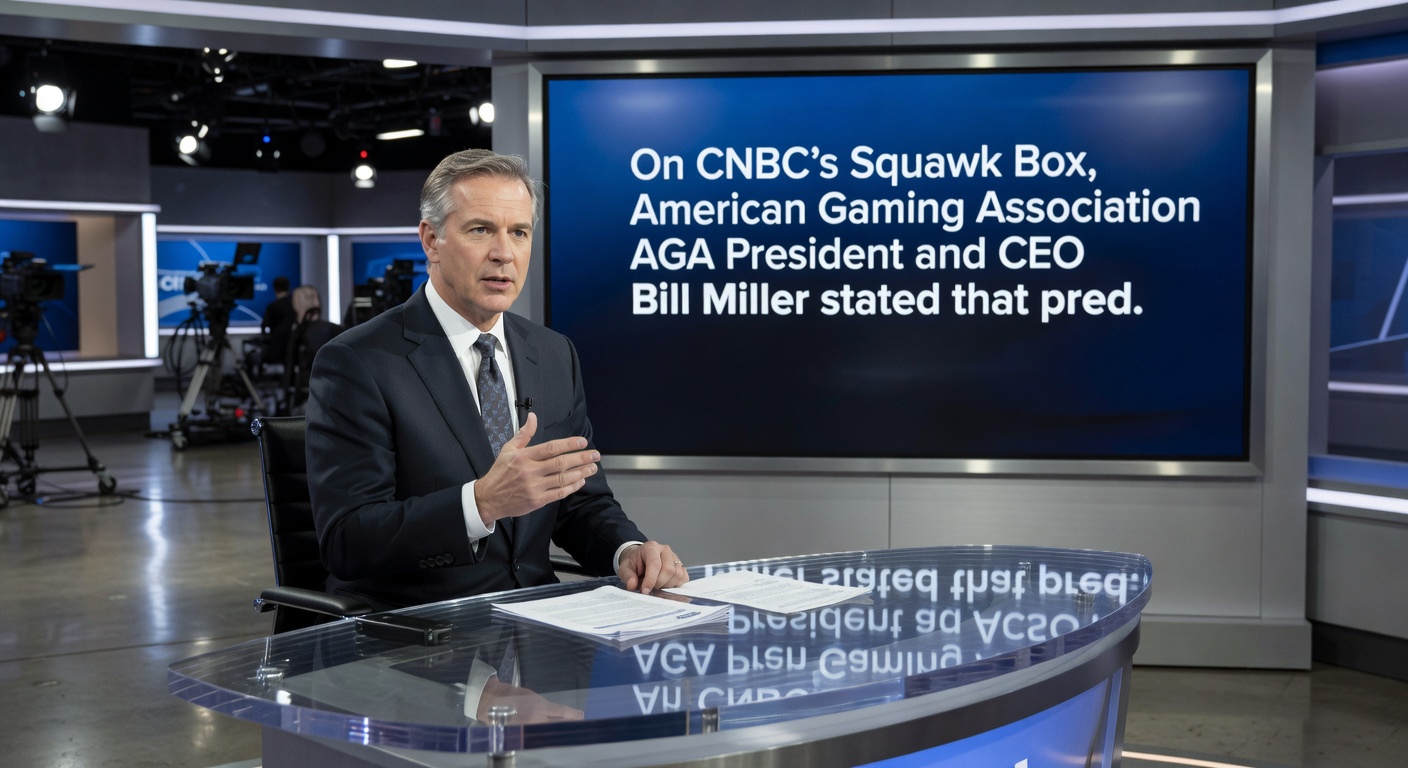
American Gaming Association President and CEO Bill Miller appeared on CNBC’s Squawk Box in late May 2026 and outlined how prediction market platforms such as Polymarket and Kalshi have led to more than $1 billion in lost gambling tax revenue for U.S. states and tribes, an increase from the organization’s earlier $500 million estimate, according to the segment and related AGA materials.
Miller framed these platforms as delivering unregulated sports betting through the format of event contracts, which allows them to operate outside traditional state regulatory structures and reduces funds available for community initiatives that rely on gaming taxes.
Context of the May 2026 Appearance
The discussion occurred amid ongoing debates over how event contracts fit within existing federal and state frameworks, with Miller noting that platforms treat sports outcomes and other events as financial instruments rather than wagers subject to licensing requirements. Observers note that this approach has expanded rapidly since the platforms gained visibility during recent election cycles and sports seasons, creating a parallel market that state officials have struggled to monitor or tax.
Data shared during the segment showed the revised revenue loss figure, which AGA attributed to broader adoption of these contracts on major sporting events and political occurrences. The organization updated its prior assessment after reviewing participation trends through early 2026, revealing that volume had grown enough to double the estimated shortfall for state and tribal budgets.
Key Points Raised by Miller
Miller described the current setup as one in which operators market products that mirror conventional sports betting yet avoid the oversight, taxation, and consumer protections required of licensed operators in most jurisdictions. He pointed out that this structure shifts revenue away from public coffers that support education, infrastructure, and tribal programs, leaving those entities with fewer resources while the platforms continue to scale.
The AGA leader also addressed the role of the Commodity Futures Trading Commission, arguing that stronger enforcement of existing rules around event contracts would help close the gap between regulated and unregulated activity. According to Miller, clearer CFTC guidelines could reduce ambiguity that currently allows platforms to classify sports-related bets as permissible derivatives rather than gaming products.
Figures presented on the broadcast indicated that the combined effect across multiple states now exceeds the original projection by a substantial margin, with some markets seeing concentrated activity on high-profile contests. Those who have tracked the sector note that the growth coincided with increased marketing and user-friendly interfaces that lowered barriers for participants previously outside traditional betting channels.
Regulatory and Revenue Implications
States and tribes have historically depended on gaming taxes to fund specific public services, yet the rise of event contracts has created a category that falls outside those collection mechanisms. Miller emphasized that the distinction between prediction markets and licensed sportsbooks rests primarily on regulatory classification rather than functional differences, which complicates enforcement efforts at the state level.
The segment highlighted that without updated federal direction, platforms can continue to operate in a gray area that bypasses requirements for age verification, responsible gaming measures, and tax remittance that apply to brick-and-mortar and online sportsbooks. Researchers who monitor gambling policy have documented similar patterns in other emerging formats, where rapid product evolution outpaces legislative responses.
Miller’s comments come as several states continue to refine their own sports betting statutes, some of which were enacted after the 2018 Supreme Court decision that opened the door to broader legalization. The AGA position calls for coordination between federal regulators and state authorities to ensure that activity labeled as event contracts receives consistent treatment with other forms of wagering.
Industry Response and Next Steps
Industry participants have watched the exchange closely because the $1 billion estimate represents a material shift in how losses are calculated and communicated to policymakers. The updated number incorporates data through the first half of 2026 and reflects participation levels that were not fully captured in earlier analyses.
Those who follow CFTC actions expect the agency to review the comments as part of its ongoing examination of event contract listings. Miller’s appearance on Squawk Box provided a public platform for reiterating the need for clearer boundaries, which the AGA believes will protect both state revenues and the integrity of regulated markets.
Conclusion
The May 2026 Squawk Box segment delivered a focused update on AGA’s assessment of prediction market effects, centering on the revised $1 billion revenue loss figure and the call for enhanced CFTC oversight of event contracts. The discussion tied these platforms directly to reduced funding for state and tribal programs while underscoring the regulatory distinctions that separate them from licensed sports betting operations. As the sector evolves, stakeholders continue to monitor how federal and state responses align with the growth of these products.